What Is an Archive Node?
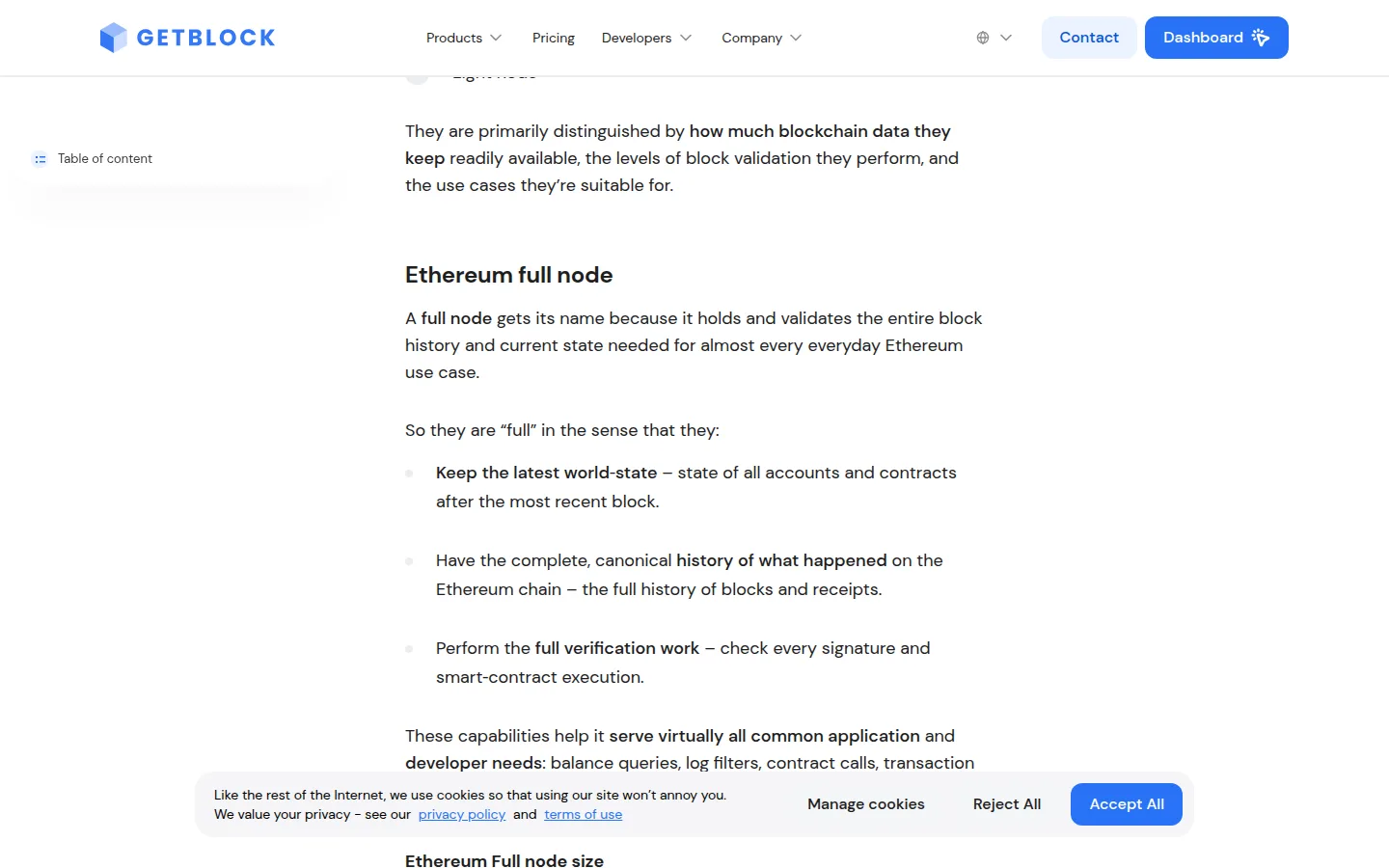
An Ethereum archive node is an instance of an Ethereum client configured to build an archive of all historical states. Archive-node mode is useful for certain use cases, but it can be more tricky to run than a full node. An archive node retains every historical state of a blockchain from the genesis block forward, unlike a full node that keeps only the current state after validating all blocks. EVM archive nodes store the network state at each block in an archive that can be queried. For a project such as an egem archive node, this means the node keeps all past details of a blockchain, letting you check old balances and map out past activities.
Why Archive Nodes Matter
Archive nodes have become a critical part of Ethereum infrastructure. They are essential infrastructure for block explorers, analytics platforms, and DeFi protocols that need to query historical state. An archive node stores the entire history of a blockchain, including all past states and balances at every block, allowing developers to query historical data. For auditors, insurers, and custody teams, this complete record supports verification, forensics, and claims review.
Key Features for Security and Scalability
Strong security practices matter for any node that will be used as evidence. Hardware security modules, multi-signature keys, access controls, and clear incident plans reduce risk. Cryptography also plays a role: Merkle proofs and hashing such as SHA-256 help confirm data has not been tampered with and support audit checks.
Performance depends on storage choices. Fast NVMe drives work well for immediate data access, while cold storage provides a cost-effective way to keep archived data long term. Data partitioning or sharding can help manage growth and reduce costs as usage increases.
Storage and Performance Considerations
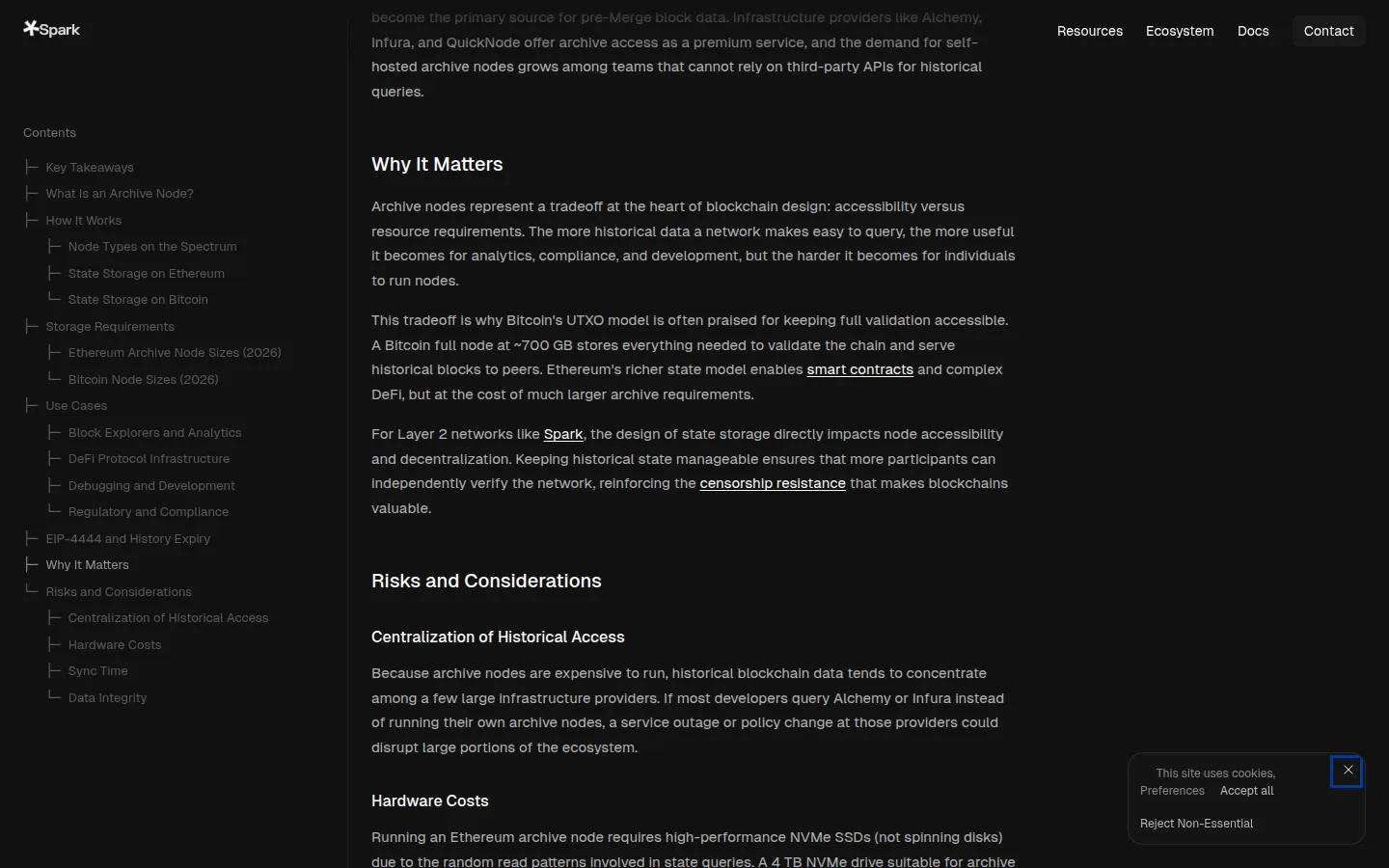
Running an archive node comes with real resource demands. Spark Money gives 2026 Ethereum archive-node size estimates of 2 TB for Erigon and over 12 TB for legacy Geth. As of mid-2025, baseline archive-node disk sizes were approximately 12 TB for Geth, 14 TB for Nethermind, 3 TB for Erigon, and 12 TB for Besu. These figures explain why operators plan storage capacity carefully, rely on fast NVMe storage for live databases, and use cold storage for long-term retention.
Research and Evidence
A USENIX ATC 2024 paper reports a prototype called SLIMARCHIVE that achieves a 98.1% storage reduction, 19.0× higher state-access throughput, and an average 1112.5× faster transaction execution compared with vanilla Geth. This kind of research shows that archive-node storage can become more efficient while preserving complete history.
Monitoring and Comparison
Operators track metrics such as storage use, CPU utilization, input/output activity, sync time, block time, and orphan rates. Real-time monitoring with tools like Prometheus and Grafana helps surface sudden issues, while periodic reports help plan for future capacity. Comparing archive nodes, full nodes, and light clients shows that archive nodes offer the deepest historical data but require the most storage and maintenance.
Who Benefits
Custodians, insurers, auditors, and developers benefit most from archive nodes. Insurers use them to provide evidence for claims and underwriting. Developers use them for deep investigation and historical queries that a light node cannot support. For compliance teams, the ability to prove exactly what happened at a certain block time is valuable during assessments.
Practical Guidance
Start by estimating compute and storage needs. Use NVMe for the active database and keep automatic backups in cold storage. Verify hashes with each snapshot, monitor with tools such as Prometheus and Grafana, and practice recovery drills. These steps turn an archive node into a trustworthy evidence source for insurers and auditors.
Conclusion
Archive nodes are becoming a core part of blockchain infrastructure for institutions that need verifiable history. Evidence from industry sources and academic research shows that complete historical state is both valuable and increasingly feasible to store.