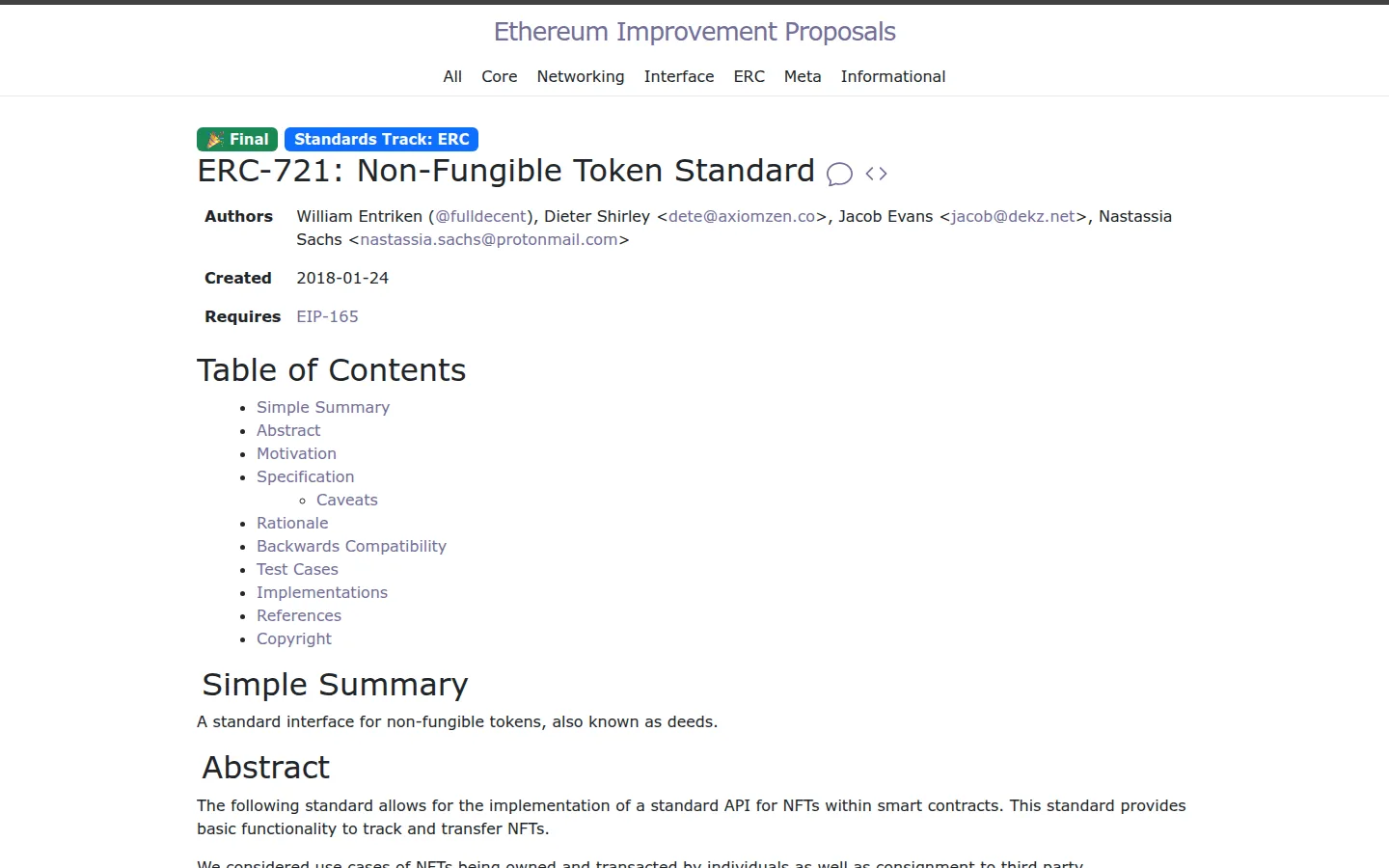

The ERC-721 standard is the non-fungible token standard on Ethereum. It was proposed in January 2018 by William Entriken, Dieter Shirley, Jacob Evans, and Nastassia Sachs. EIP-721 was created on January 24, 2018, and the standard was ratified in June 2018. Before that, CryptoKitties launched on the Ethereum mainnet on November 28, 2017, becoming the first widely known application of the standard. EtherGem has implemented this standard on the EGEM blockchain network, offering an alternative blockchain platform for NFT projects.
What Are ERC721 Tokens?
ERC-721 tokens are non-fungible. Unlike ERC-20 tokens, where every token is identical, each ERC-721 token carries a distinct token ID and unique properties. The smart contract tracks ownership, enables transfers, and stores metadata. Developers can create digital assets where individuality is part of the code itself.
Importance of NFTs in the Blockchain Ecosystem
NFTs provide proof of ownership for digital assets. They are used for gaming items, event tickets, digital credentials, and access passes. Because the ERC-721 standard is widely adopted, tokens work across wallets, marketplaces, and applications. For creators, royalties can be programmed into the token itself, and every transaction is recorded permanently on the blockchain.
Overview of the Blockchain Network
The EGEM blockchain is an Ethereum-based network. It runs on a proof-of-work consensus mechanism similar to Ethereum’s original design. Block time averages around 15 seconds, and the network handles approximately 15-20 transactions per second under normal conditions. Lower gas fees are a clear advantage: NFT minting on EGEM usually costs $0.50 – $2.00, while Ethereum mainnet can cost $15 – $100+ during high-traffic periods.
Advantages of Using EtherGem ERC721 Tokens
Cost efficiency is the most immediate advantage for creators and collectors. Lower transaction fees mean artists can launch collections without a large upfront investment, and collectors can trade more often. Community governance gives token holders a direct voice in network decisions. The network’s transaction speed is sufficient for a smooth user experience. That said, liquidity and available wallet options are more limited than on Ethereum mainnet, so users should weigh those trade-offs.
Market Statistics and Trends
The EGEM ecosystem has processed over 15,000 ERC721 transactions since launch. Approximately 3,200 unique wallet addresses hold at least one EGEM token, and roughly 40% of holders have engaged in secondary market transactions. The network supports 85+ active collections. Community growth is also visible: the EGEM Discord community has grown by 35% over the last three months.
Tools for Managing EtherGem ERC721 Tokens
MetaMask can be configured for the EGEM network by adding a custom RPC with the correct chain ID and network details. Once configured, it displays ERC-721 tokens just like other NFTs. Hardware wallets can be connected through MetaMask for cold storage. Always verify contract addresses before interacting with any token.
Use Cases for EtherGem Tokens
The main use cases include gaming assets, digital art, event tickets, and supply-chain certificates. Because ERC-721 ownership and metadata are recorded on chain, creators can program royalties directly into smart contracts. The lower transaction costs make experimentation more affordable for new projects.
Frequently Asked Questions
Can I use MetaMask to manage my EtherGem ERC721 tokens?
Yes. Add the EtherGem network as a custom network in MetaMask, entering the chain ID, RPC URL, and block explorer details. After configuration, MetaMask treats the EGEM network similarly to Ethereum.
Are EtherGem blockchain NFTs as secure as Ethereum mainnet NFTs?
They use the same ERC-721 smart-contract logic, but a smaller network has less computational power securing it. For most users, security depends on wallet practices and contract verification.
Conclusion
EtherGem’s ERC-721 implementation offers a lower-cost way to work with non-fungible tokens while staying compatible with the standard that Ethereum developers already know. The ecosystem is still developing, but the technical foundation is in place, and the community continues to grow.